In-Person vs Virtual Keynote Speaker in Sydney: What Works Best for Corporate Events?

Choosing between a virtual keynote speaker in Sydney and an in-person delivery is no longer just a logistics question.
Event organisers are managing distributed teams, shrinking lead times, and audiences that span multiple cities and time zones. The format decision now affects energy, engagement, and how well the message actually lands.
In-person has not been replaced. It has been repositioned alongside virtual as a genuinely different tool for a different job.
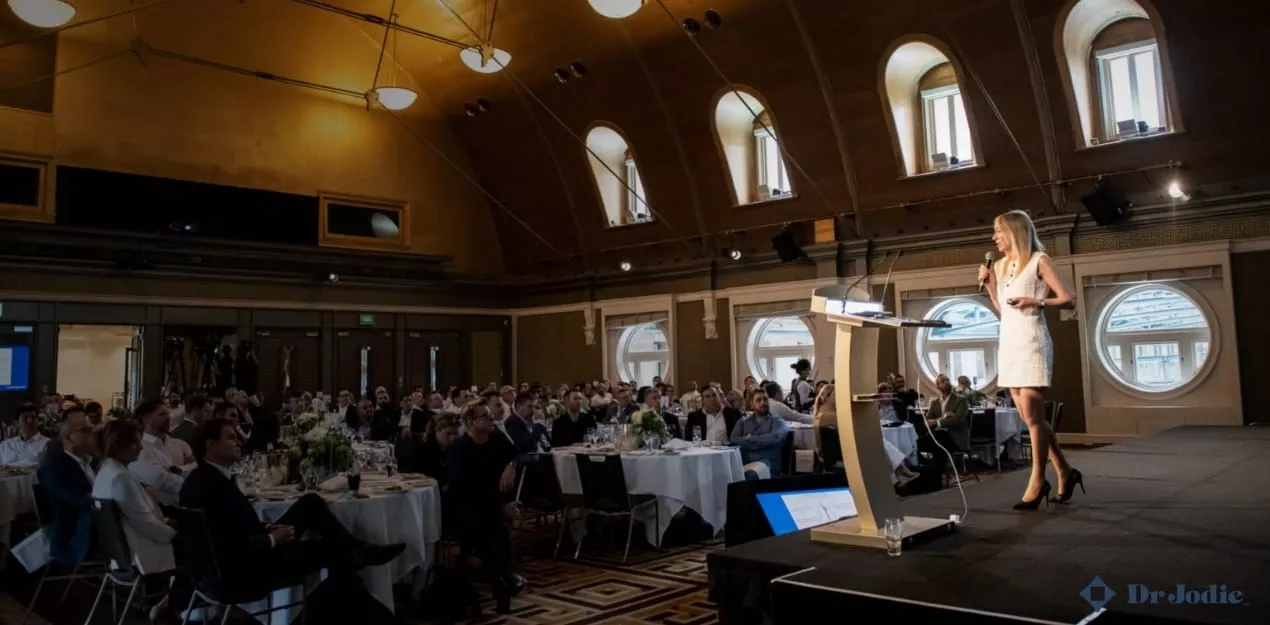
I have delivered more than 400 keynotes across both formats for Sydney organisations, national conferences, and APAC events. Audience size, event goal, team geography, and budget all shape which format gives your people the best experience and your organisation the strongest return.
The Core Difference: What Either an In-Person or a Virtual Keynote Actually Delivers
In-person keynotes deliver something a screen cannot replicate: the energy of a shared physical experience. Collective laughter, visible audience reaction, spontaneous Q&A moments, the feeling in a room when a message lands across 500 people at once.
For large flagship events, leadership summits, and any keynote designed to signal genuine organisational commitment, in-person remains the stronger format.
Virtual keynotes deliver reach, flexibility, and real cost efficiency. In my experience, they work particularly well for distributed teams, regular program delivery, and Sydney-based leadership teams that need to connect with staff in Melbourne, Brisbane, or across APAC without the cost of bringing everyone into one room.
The right keynote speakers provide practical takeaways for audiences regardless of format, but the way those takeaways land differs significantly between a ballroom and a screen.
Hybrid events combine both formats and require the speaker to engage two audiences simultaneously. Confirm hybrid delivery experience before booking for any event with a mixed in-person and remote audience.
Virtual vs In-Person: What Each Format Does Best
| Dimension | In-Person | Virtual |
| Audience size | Any size, scales from 30 to 3,000+ | Best under 200. Engagement drops at scale on screen. |
| Energy and presence | Full room dynamic. Collective experience. Physical energy. | Dependent on the speaker’s on-camera skills and production quality. |
| Geographic reach | Limited to attendees who can travel to the venue | Unlimited. Sydney stage can reach APAC and global simultaneously. |
| Keynote speaker cost | Higher. Venue, catering, travel, and accommodation apply. | Lower. Virtual fees are typically of the in-person equivalent. |
| Mental health keynotes | Preferred. Shared physical space creates psychological safety at scale. | Acceptable if production is high quality and content is carefully framed. |
| Audience interaction | Natural. Q&A, table discussions, corridor conversations. | Requires deliberate design. Polls, chat, and moderated Q&A streams. |
| Session length | 60 minutes standard | Attention drops faster on screen. |
| Hybrid delivery | Speaker engages the room naturally | The speaker must balance the camera and the room simultaneously. |
| Post-event connection | Networking, spontaneous conversations, relationship building | Limited. Ends when the platform closes. |
| Lead time | Book 4 to 12 months ahead for premium speakers | Typically shorter. 4 to 8 weeks for most engagements. |
Sydney Event Scenario Decision Table: Which Format to Book
These recommendations are drawn from what I have seen work consistently across Sydney corporate, association, education, and hybrid events.
If you are booking a mental health speaker for corporate events, the format question carries additional weight; I have addressed that scenario specifically in the table below. The best speakers are often booked 6 to 12 months in advance, so the format decision is worth making early.
| Sydney Event Scenario | Recommended Format | Why | Key Consideration |
| Large annual leadership summit (200+ attendees, CBD venue) | In-person | Scale, energy, and cultural moment require physical presence. Room dynamics are irreplaceable. | Book 6 to 12 months ahead. EOFY and pre-Christmas dates lock fast. |
| National team event with staff in Sydney, Melbourne, Brisbane, and Perth | Virtual or Hybrid | In-person is impractical for distributed teams. Hybrid brings the Sydney office together while streaming to other cities. | Confirm the speaker’s hybrid delivery capability before booking. |
| Mental health awareness event for the whole organisation | In-person preferred, virtual acceptable | In-person creates psychological safety at scale. Virtual works if production quality is high and content is carefully framed. | Brief the speaker on audience wellbeing context regardless of format. |
| EOFY leadership reset (50 to 100 attendees, Sydney office) | In-person | Intimate enough for real energy and connection. EOFY context benefits from shared physical experience. | Sydney-based speaker avoids travel costs. Book March to April for the June event. |
| Emerging leaders program (20 to 30 participants, multiple cohorts) | Virtual | Multiple cohorts across locations. Virtual scheduling and access make it easier without sacrificing depth at this group size. | Shorter sessions work better virtually. 45 minutes plus Q&A is the sweet spot. |
| Conference keynote (association or industry event, 300+ delegates) | In-person | Large audience, flagship moment, delegates have travelled. In-person is expected and delivers the drawcard value. | A hybrid stream for members who cannot attend expands reach without replacing the in-person experience. |
| Executive team strategy offsite | In-person | For the senior cohort, strategic agenda, relationship, and trust-building benefits require physical presence. | A workshop format suits this scenario better than a keynote. |
| Wellbeing webinar series (monthly, distributed workforce) | Virtual | Regular cadence, wide reach, cost-efficient. Virtual suits ongoing program delivery rather than a one-off flagship event. | Pre-record backup recommended. Schedule speaker tech check 30 minutes before go-live. |
| School staff development day | In-person preferred | Teachers respond better to in-room energy and connection. | Virtual is acceptable for regional or rural schools where travel costs are prohibitive. |
| International conference (APAC audience, Sydney as hub) | Hybrid | Sydney stage anchors the event for local delegates. Virtual stream serves APAC and global attendees without requiring travel. | AEDT/AEST time zone must be confirmed with all remote participants and the speaker team. |
What Virtual Keynotes Cannot Replicate, And When That Matters
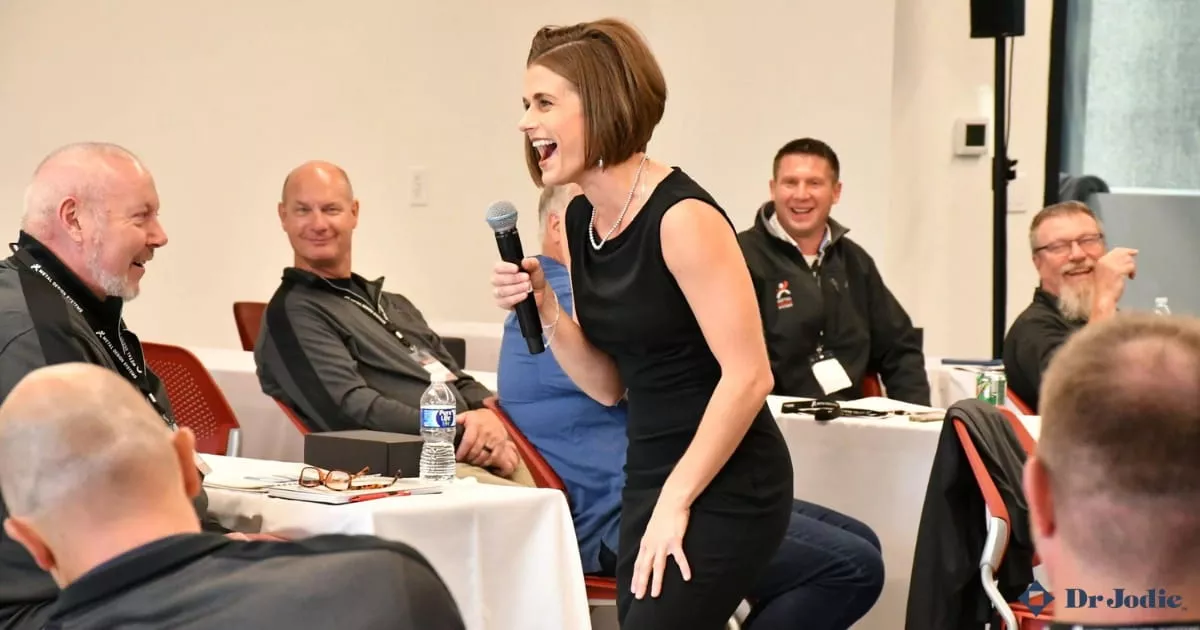
The room dynamic is the hardest thing to replace. When 200 people share a physical space, the collective energy shifts in ways a screen cannot carry.
Visible audience reaction, spontaneous moments, the feeling when a message lands across an entire room. These are not production problems; they are format limitations.
The corridor conversation matters more than most event organisers budget for. In my experience, the informal connections that happen before a session, during breaks, and after the keynote often drive as much cultural impact as the keynote itself. Virtual events end when the platform closes.
Psychological safety works differently at scale for sensitive topics. I have delivered mental health keynotes to rooms of 300 people and to distributed audiences of the same size on screen.
The shared physical experience normalises the conversation in a way virtual cannot fully replicate. For large mental health awareness events, in-person is the preferred format where it is logistically feasible.
Post-event energy also differs. The motivation and connection that follows a strong in-person keynote tends to carry into the hours and days after the event. Virtual sessions, even excellent ones, tend to close abruptly.
None of this means virtual does not work. It means virtual works best when you design for it deliberately, rather than treating it as a direct substitute for in-person delivery.
How to Evaluate a Speaker's Virtual Delivery Capability: A Checklist
Not every guest speaker who delivers effectively in a room delivers effectively on screen. Virtual keynote delivery is a distinct skill set, and it is worth evaluating carefully before confirming any booking.
When researching keynote speakers, Professional Speakers Australia listings will often include virtual delivery details.
Speaker profiles on Saxton Speakers are also worth reviewing for virtual and hybrid experience, but the questions below are worth asking directly before any booking is confirmed.
| Capability | What to Ask or Check | Red Flag |
| On-camera delivery | Watch a full-length virtual recording. Does the speaker hold energy for 40 to 60 minutes on screen? | Only short clips available. No full-length recording to review. |
| Technical setup | Two-camera setup, broadcast lighting, professional microphone, wired connection. Ask for a tech spec sheet. | Presenting from a laptop webcam on WiFi with no backup plan. |
| Interactive tools | Confirm the use of live polls, chat, or moderated Q&A. Ask how they structure virtual interaction. | No interactive elements planned. Passive monologue only. |
| Platform experience | Confirm experience on your platform. Zoom, Teams, Webex, Hopin. Can they run their own polls? | Unfamiliar with your platform. No tech rehearsal offered. |
| Session length | Confirm the speaker structures the content for 40 to 50 minutes on-screen, not ballroom pacing. | Plans to deliver a 60- to 75-minute in-person session are unchanged. |
| Hybrid experience | Can the speaker engage both the room and the camera simultaneously? | Only ever delivered to one audience type. No hybrid experience. |
| Tech rehearsal | Confirm a rehearsal is scheduled 30 to 60 minutes before go-live. | No rehearsal offered. Expecting to go straight to live. |
Briefing Your Speaker Differently for Virtual and Hybrid Delivery
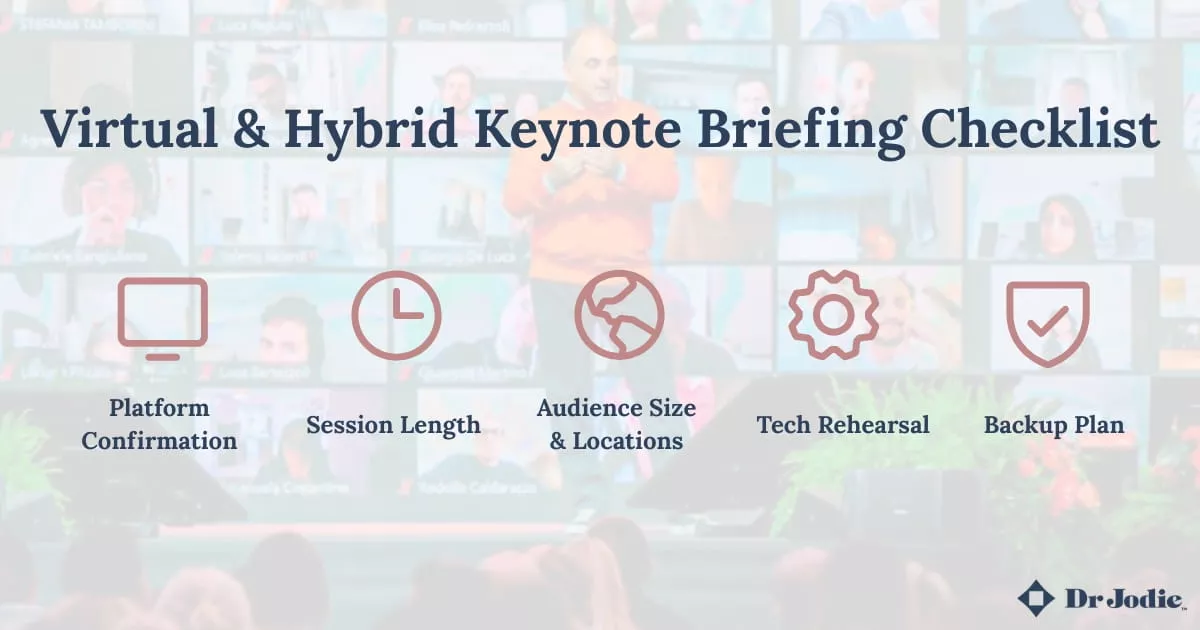
A virtual or hybrid event requires a different brief than an in-person keynote. The standard brief covers topic, audience, and timing.
What I ask event organisers to add for virtual and hybrid delivery covers several additional fields that rarely appear in a standard booking request.
- Platform confirmation. Zoom, Microsoft Teams, Webex, Hopin. Confirm the speaker has used it before or allow time for a rehearsal session.
- Session length. Confirm the speaker has a version of their content structured for 40 to 50 minutes on screen, not their standard in-person format.
- Audience size and location. How many attendees, how many locations, what time zones? For APAC hybrid events anchored in Sydney, explicitly confirm all times in AEDT or AEST.
- Hybrid specifics. Camera positions, whether the speaker addresses the room or the camera, how remote Q&A will be managed, and whether a tech producer will be on the call.
- Tech rehearsal. Non-negotiable for virtual and hybrid events. Schedule 30 to 60 minutes before go-live. Confirm whether this is included in the booking, or arrange it separately.
- Backup plan. Confirm whether a pre-recorded backup exists and who manages the switch if the connection drops.
The more specific your brief, the better the outcome on the day. If you are still working through format options, my keynote speaking page covers delivery formats, topics, and availability in full.
FAQs
Are virtual keynote speakers cheaper than in-person?
Yes, virtual keynote speakers typically charge 60 to 80% of their in-person equivalent fee. Travel, accommodation, and logistics costs are eliminated, but high-quality virtual delivery still requires professional AV setup and platform expertise, so the total saving is not always as large as the headline fee suggests.
What is a hybrid keynote speaker?
A hybrid keynote speaker delivers simultaneously to a live in-person audience and a remote audience connected via a streaming platform. Engaging both audiences equally at the same time is a distinct skill.
How long should a virtual keynote be?
A virtual keynote should run 40 to 50 minutes, followed by 10 to 15 minutes of moderated Q&A, if included. Attention drops significantly after 50 minutes on screen. Speakers who deliver their standard in-person content unchanged for a virtual audience are one of the most common causes of virtual event underperformance.
Can a mental health or wellbeing keynote work virtually?
Yes, a mental health keynote can work virtually with the right speaker and a carefully considered brief. In-person is generally preferred for large awareness events because the shared physical space creates a different kind of psychological safety, but virtual is a practical alternative when in-person is not possible.
What is the best platform for a virtual keynote in Sydney?
Zoom and Microsoft Teams are the most widely used platforms for virtual corporate keynotes in Sydney. Most organisations already hold licences, and their IT teams are familiar with both. Confirm that the speaker has experience with your specific platform, and schedule a tech rehearsal regardless of which platform you use.
Plan Your Next Sydney Event with Confidence
I deliver keynotes both in-person and virtually for Sydney organisations, national conferences, and APAC events. Every engagement is structured around your audience, your goals, and the format that delivers the best experience for your people on the day.
If you are planning a corporate event and want to discuss format, fit, and topics, reach out directly to talk through your event.