Keynote Speaker vs Workshop: Which Format Should You Book for Your Sydney Event?

The keynote speaker vs workshop decision is often the point at which Sydney corporate events win or lose. I have seen it happen both ways. Event planners spend weeks finding the right speaker, then far less time deciding how to use that speaker.
Both formats deliver real value. But they serve different goals, different audience sizes, and different moments in an event program.
Here is how to tell which one you actually need, and when the answer is both, on the same day, in the right order.
Keynote Speaker vs Workshop: What Each Format Actually Does
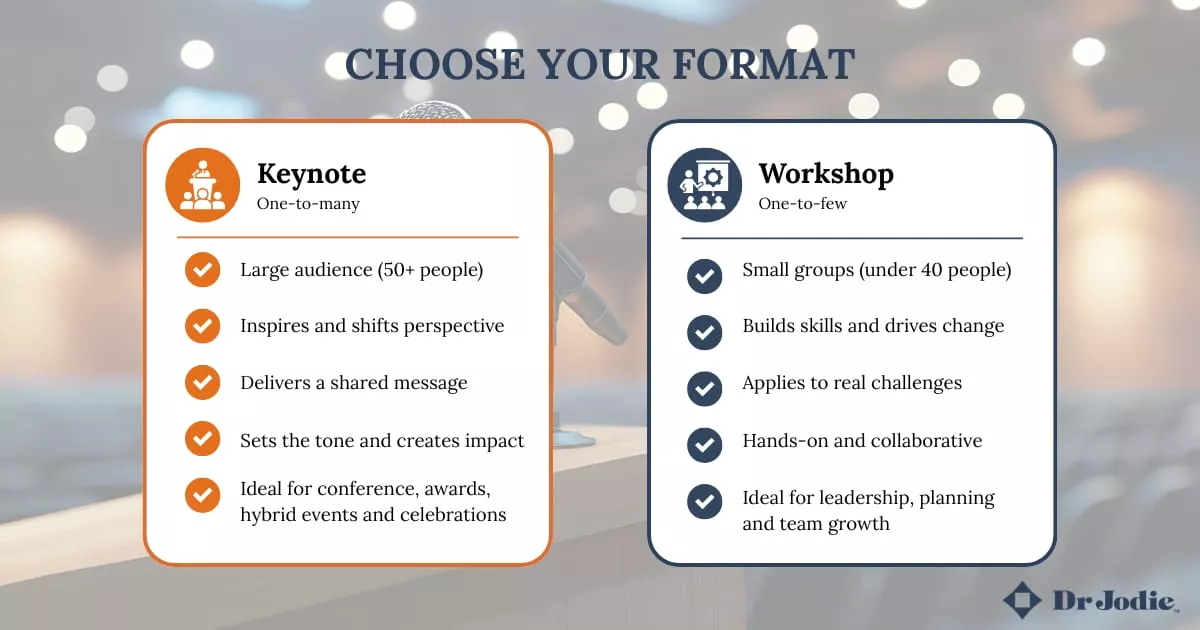
A keynote is a one-to-many format. One speaker, one story, one shared experience for the entire room. It is designed to shift perspective, set a tone, and create a moment the audience remembers.
It works at scale. It does not require interaction to be effective.
A workshop is a one-to-few format. Smaller groups, active participation, and real-time tool application. It changes behaviour more directly than a keynote, but loses effectiveness when scaled beyond 30-40 people.
The mistake most event planners make is treating them as interchangeable. They are not. They do different jobs. The question is: what job does your event need done?
When a Keynote Speaker Is the Right Choice
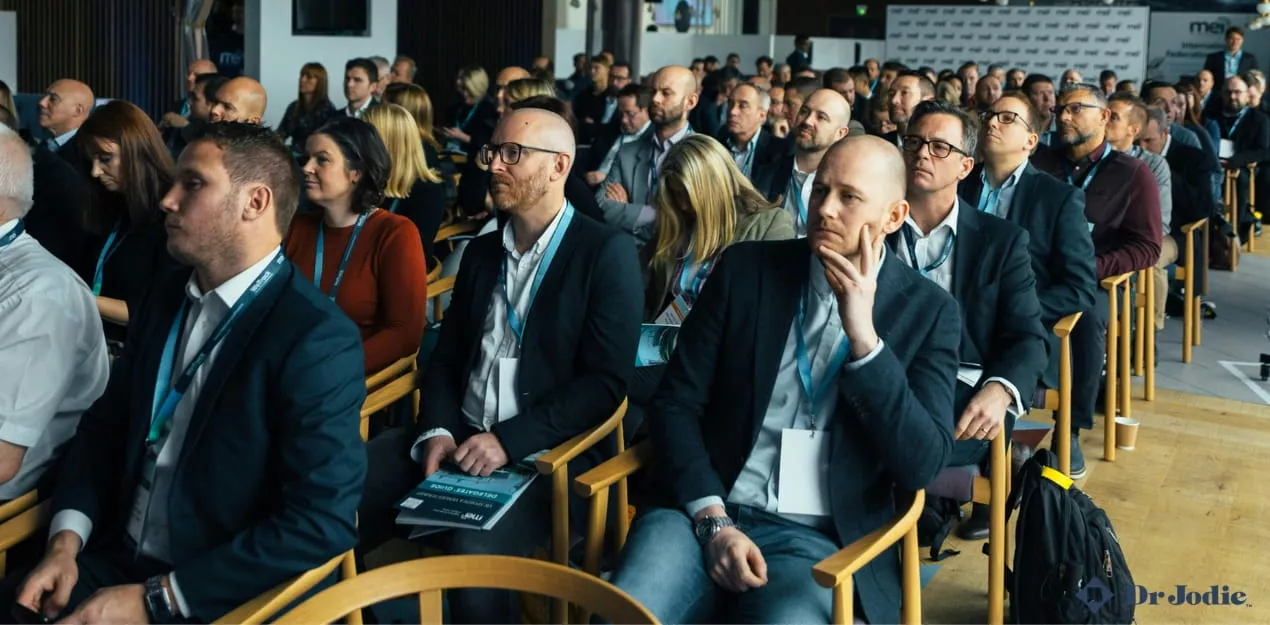
A keynote is the stronger choice when your audience is large. Once you have more than 50 people, a workshop quickly loses its interactive value. I have seen this play out at conferences, association summits, and large corporate events across the city.
It is also the right call when tone-setting matters. If you need to open the day with energy, close with a clear narrative, or create a cultural moment, a keynote does that job. You can see how this applies across corporate keynote speaking in Sydney.
Consider a keynote when:
- Your audience is 50 or more people.
- Your goal is to shift perspective, introduce a shared framework, or align the room around a theme.
- The event is celebratory, such as a pre-Christmas function, EOFY recognition night, or a company milestone.
- You are running a hybrid event with a stage audience and remote attendees, where workshop interactivity does not carry over to the stream.
- You want to normalise a sensitive topic like mental health, burnout, or anxiety with a large group. A keynote creates safety through scale. Nobody is put on the spot.
Best for: Large corporate events, industry conferences, professional association summits, awards nights, hybrid events, and any event where the primary goal is inspiration, alignment, or cultural signalling.
When a Workshop Is the Right Choice

A workshop is the stronger choice when your audience is small. With groups of fewer than 40 people, interaction and discussion become central to the value. That dynamic does not exist at scale.
It is also the right format when your goal goes beyond inspiration. If you need behaviour change, skill development, or practical application, a workshop delivers more than a keynote can.
In my experience working as a workshop facilitator for Sydney organisations, bringing in leadership cohorts and executive teams, the groups that get the most out of a workshop arrive with a specific challenge they need to work through. That focus is what makes the format effective.
Consider a workshop when:
- Your audience is under 40 people.
- Your goal is skill-building, behaviour change, or practical application.
- You are working with a leadership cohort, an executive team, or an emerging leaders program that expects active participation.
- The event is a strategic offsite, a People and Culture program, or a team development day where people need to leave with tools they can use immediately.
- You have already run a keynote on the topic and want to go deeper with a smaller group.
Best for: Executive team offsites, leadership development programs, People and Culture team events, HR workshops, and any event where the primary goal is skill-building, behaviour change, or strategic application.
When to Combine Both: The Keynote Plus Workshop Model
Most event planners treat the keynote speaker vs workshop decision as either/or. In my experience, that is where the biggest opportunities get left on the table. The most effective full-day corporate learning events I have run in Sydney deliberately use both formats in sequence.
The keynote opens the room. It shifts perspective, creates energy, and gives the whole audience a shared framework to hold onto. The workshop follows with a smaller cohort and applies that framework to the real challenges the team is facing right now. The difference in outcome is significant.
I have delivered this combined model for organisations across banking, professional services, healthcare, and government. It works because the keynote does the broad work and the workshop does the deep work.
This model works particularly well for:
- EOFY leadership events where the morning keynote resets the team and the afternoon workshop builds the plan for the next half
- Conference programs where a morning keynote speaker also runs a breakout workshop for a specific audience subset
- Organisations investing in a full-day mental health, high performance, or resilience program that needs both reach and depth
The Mind Strength Method lends itself naturally to both formats. It is broad enough to land with a full conference audience and deep enough to drive real work in a smaller workshop setting.
The combined model is still underused. Organisations that invest in both formats on the same day consistently report stronger outcomes than those that invest in only one.
Sydney Event Format Decision Table
After 400+ keynotes and workshops in Sydney and around the world, here is what I have seen consistently work across corporate, association, school, and hybrid events. In Sydney, many organisations hold EOFY events in May and June and leadership planning days in Q1, making the choice of format particularly important.
Use this table as a starting point for your event planning Sydney decisions. Every event is different, but the patterns below hold.
Event Type (Sydney) | Recommended Format | Why | Best For |
Annual leadership summit | Keynote | Large audience, tone-setting moment, opens or closes the day with shared direction | ASX 200, government, professional associations |
EOFY team reset | Keynote + Workshop | Keynote resets the narrative, workshop gives teams practical tools to apply immediately after | Corporate teams of 20 to 100 |
People and Culture offsite | Workshop | Smaller group, behaviour change goal, requires interaction and individual application | HR teams, leadership cohorts |
Conference (300+ attendees) | Keynote | Scale makes workshop format ineffective, one story, one framework, maximum reach | Industry associations, large corporates |
Emerging leaders program | Workshop | Skill-building focus, smaller cohort, needs practical application and real-time discussion | High-growth start-ups, corporate talent programs |
Mental health awareness event | Keynote | Large audience, normalise the conversation, provide accessible tools without clinical depth | Organisations running R U OK Day, MHFA events |
Executive team strategy day | Workshop | Senior cohort, specific challenges, requires active problem-solving not passive listening | C-suite, founders, executive teams |
School staff development day | Keynote or Workshop | Keynote for whole school, workshop for smaller faculty groups, depends on goal and group size | School principals, heads of wellbeing |
Pre-Christmas celebration event | Keynote | High energy, celebratory tone, audience wants inspiration not a working session | Corporate event planners, October to November |
Hybrid event (Sydney stage + remote) | Keynote | Workshop interactivity is lost in hybrid format; keynote translates better across both audiences | Organisations with distributed teams |
The Format Question Nobody Asks, But Should
Most event planners ask: keynote or workshop? The better question is: what do I need my audience to be able to do differently after this event, and which format gets them there?
A keynote can open a door. It can shift how a room thinks about burnout, leadership, imposter syndrome, or psychological safety. It gives people language and a framework they can carry with them.
A workshop can take them through that door. It applies the framework to their specific team, challenges, and moment in the business cycle.
If you can only choose one, choose based on audience size and primary goal. If you can invest in both, the keynote speaker vs workshop combination almost always delivers more sustained impact than either format alone. Before briefing, it is worth checking speaker credentials and dual-format capability through Professional Speakers Australia or a bureau like Saxton Speakers.
Frequently Asked Questions
What is the difference between a keynote speaker and a workshop facilitator?
A keynote speaker delivers a prepared presentation to a full audience, typically 45 to 60 minutes, designed to inspire and introduce a shared framework. A workshop facilitator leads a smaller, interactive session focused on skill-building, real-time problem-solving, and practical application. The key difference is scale and interactivity.
Which is better for a corporate event, a keynote or a workshop?
It depends on your audience size and your goal. For large audiences, a keynote is more effective. For smaller groups where behaviour change is the goal, the keynote speaker vs workshop combination typically produces the strongest outcomes.
How many people do you need for a workshop to be effective?
Workshops are most effective with groups of 10 to 40 people. Beyond 40-50 attendees, the interactive element begins to break down. At that scale, a keynote is typically the more effective format.
Can the same speaker deliver both a keynote and a workshop?
Yes, and it is often the strongest choice for a full-day event. It creates continuity of framework and language across the day. Not all speakers offer both formats, so it is worth confirming this when briefing.
What format works best for a mental health or wellbeing event in Sydney?
For large mental health awareness events in Sydney, a keynote works best. It normalises the conversation at scale without putting individuals on the spot. Organisations looking for a dedicated workplace mental health speaker who also runs leadership workshops will find the combined model delivers more sustained behaviour change.
Not Sure Which Format Fits Your Event?
Dr Jodie works with Sydney organisations across both formats, from large-scale corporate keynotes to targeted leadership workshops. The keynote speaker vs workshop decision does not have to be complicated. You can explore her options for corporate keynote speaking in Sydney or reach out directly to talk through your event. Dates fill up fast, so it is worth getting in touch early.