The Anxiety Nobody’s Talking About: How AI Uncertainty Is Affecting Your People Right Now


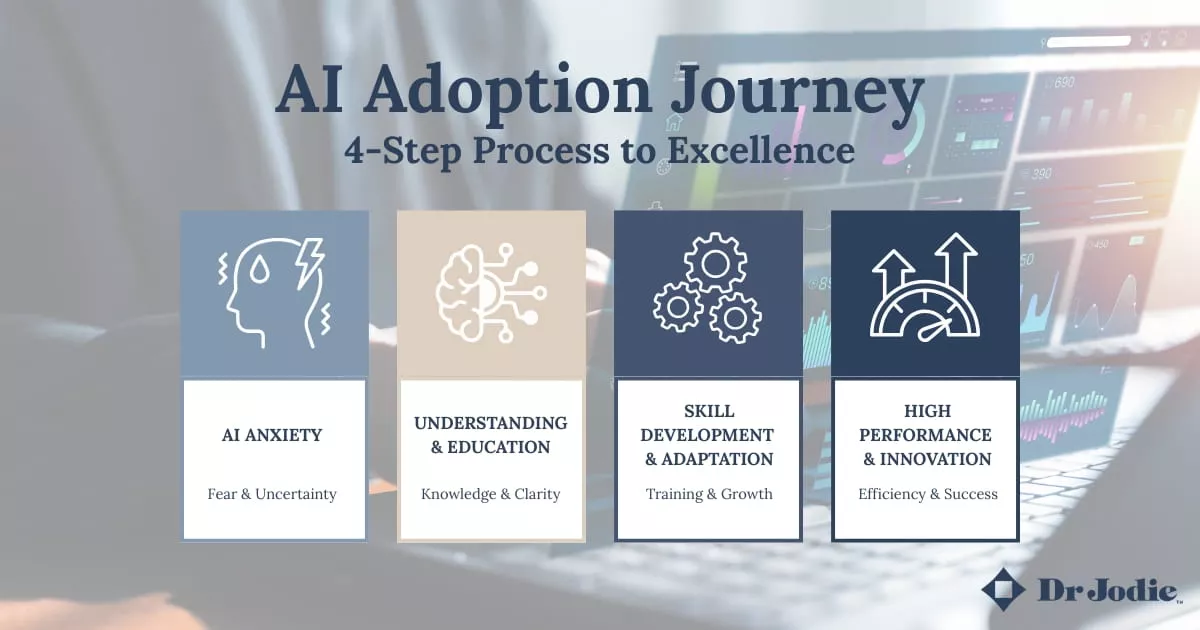
Something is happening in your workforce that engagement surveys may not be capturing. Between the all-hands announcements about AI transformation and the quiet conversations at desks, a specific kind of anxiety is taking hold.
It is not irrational. It is a reasonable response to rapid change with incomplete information, and it is affecting performance, retention, and psychological safety across industries.
This is what workplace anxiety AI looks like in 2026. And it is one of the most pressing people-risks HR leaders are not yet naming directly.
- Workplace anxiety AI is now a core people-risk. Fear of redundancy, loss of control, and irrelevance of skills are growing as generative AI becomes embedded in daily workflows.
- According to the Adaptability in a Changing World research report, 30% of Australian HR leaders believe their employees aren’t prepared for AI-driven business transformation.
- Unmanaged AI anxiety erodes employee engagement, psychological safety, and decision-making, often before leaders notice it.
- Dr Jodie Lowinger’s Mind Strength Method offers a neuroscience-based framework to turn AI anxiety into clarity, confidence, and high performance.
What Is Workplace Anxiety About AI?
Workplace anxiety about AI refers to the ongoing stress, fear, and apprehension surrounding the growing role of artificial intelligence in the workplace. It goes beyond general technology concerns. This is anticipatory uncertainty about job security, role relevance, and professional identity.
An overwhelming 90% of employees report that their organisation uses at least one AI technology.
Generative AI tools like ChatGPT, Microsoft Copilot, and Google Gemini are no longer experimental. They are embedded in daily workflows across industries right now.
For employees, the symptoms are often invisible to leadership:
- Rumination about job loss before and after AI rollouts
- Sleep disruption during transformation announcements
- Avoidance of new tools or shadow IT workarounds
- Reduced willingness to speak up in team meetings
The organisational impact is measurable.
Research shows that 24% of workers report worsened mental health from information overload linked to AI adoption.
Unscheduled absences due to stress rose from 42% in 2023 to 57% in 2024, according to a national survey of 600 senior managers and HR professionals by the Australian Human Resources Institute.
This is not an individual weakness. It is a structural leadership issue and a critical agenda item for HR and People and Culture teams in 2026.

Core Drivers of Workplace AI Anxiety and FOBO
AI anxiety makes sense when change is fast, and information is incomplete. Understanding what drives it helps HR respond effectively rather than dismissing concerns.
Economic disruption sits at the centre. The International Monetary Fund estimates that almost 40% of jobs globally will be affected by AI, with advanced economies facing higher exposure due to the cognitive nature of many tasks. For knowledge workers in finance, law, tech, and consulting, this threatens not just jobs but professional identity.
This has given rise to FOBO: Fear of Being Obsolete. Recent surveys show 75% of employees are concerned that AI adoption will make certain jobs obsolete.
In industries like finance, law, and consulting, 66% fear falling behind without AI skills. Most employees expect their skills could become outdated within 2 to 5 years.
FOBO manifests differently across cohorts:
- Mid-career experts fear decades of deep knowledge being automated overnight
- Early-career talent worries they will not get stretch opportunities because AI moves faster
- Managers feel squeezed between executive AI mandates and team wellbeing
Loss of control amplifies the threat. Opaque AI in hiring, performance reviews, and promotion decisions creates what researchers call “black box” anxiety. When employees cannot understand or influence AI-driven decisions affecting their future, fear intensifies.
Privacy and surveillance concerns are growing, too. As AI technology enables productivity scoring and sentiment analysis, employees worry that data will be used to penalise rather than support them.
University of Melbourne and Monash University research (2025) found that stress levels in workplaces with intensive AI algorithmic management nearly doubled compared to those without such systems.
Only 36% of global workers feel they have the skills and knowledge to use AI appropriately, contributing to feelings of anxiety about job security and relevance.
That skills gap is where disengagement begins.
How AI Anxiety Differs Across Generations, Roles, and Cultures
Anxiety patterns vary significantly across your workforce. Leaders need nuance, not one-size-fits-all messaging.
Generational differences matter:
- Millennials and Gen X often adopt AI pragmatically but want clear training and value
- Gen Z workers, while tech-native, show deep concern about ethics and meaning
- Baby Boomers frequently feel anxious about skill relevance and wary of surveillance
Role-based experiences differ, too. Frontline employees dread algorithmic monitoring and productivity scoring. Knowledge workers face anxiety as analysis tasks automate.
Managers carry both their own FOBO and their teams’ concerns simultaneously, often becoming the shock absorbers of AI-driven change.
Broad town halls alone will not address the specific concerns different groups carry. HR leaders should segment their listening and communications by cohort and role.
Building AI Literacy and Psychological Safety
AI anxiety decreases when people gain two things: accurate knowledge and a safe environment to learn, ask, and experiment.
Research shows that 73% of employees are concerned that there won’t be sufficient AI training and upskilling opportunities. That concern is valid.
Only 36% of global workers feel they have the skills and knowledge to use AI appropriately. The difference between anxiety and excitement often comes down to competence and clarity.
Concrete AI literacy initiatives worth prioritising in 2026:
- Short scenario-based workshops showing real role applications
- Role-specific microlearning for compliance, research, and operations teams
- Internal AI sandboxes where employees can safely test new tools using dummy data
- Peer learning groups focused on human skills that AI cannot replicate
Involving employees in the co-design of AI implementation can reduce anxiety and foster a sense of ownership, making them feel valued in the transition process. Transparency and communication about AI usage can also reduce employee anxiety regarding job displacement significantly.
Psychological safety practices are equally critical:
- Normalising “I don’t know” as an acceptable response
- Making it safe to flag AI errors without blame
- Encouraging teams to share both successes and failures with new tools
Applying the Mind Strength Method to Workplace AI Anxiety
The Mind Strength Method is Dr Jodie Lowinger’s neuroscience-based, evidence-backed framework for turning anxiety into focus, resilience, and high performance. It addresses the specific mental loops that AI disruption triggers.
Core elements applied to AI change:
- Recognising anxious mind loops: identifying when fear-based thinking about AI is running unchecked
- Challenging unhelpful thinking: testing catastrophic predictions against evidence
- Building courage-based action: taking small, testable steps toward AI competence
- Training mental fitness: developing daily habits that support clarity under uncertainty
The methodology is practical, not motivational. A team member caught in the thought “AI will replace me” can reframe this into a testable question: what specific tasks might AI augment, and what skills can I develop that AI cannot replicate? That shift from threat to curiosity changes behaviour at the individual and team level.
The Mind Strength Method is delivered through corporate keynotes, leadership off-sites, executive coaching, and workshops tailored to AI disruption contexts. It has been deployed with leaders and teams at organisations including Google, Amazon, Allianz, NAB, and JP Morgan Chase, always in a commercial, performance-oriented context.
For organisations navigating AI-driven change, this is not generic wellbeing content. It is an evidence-based methodology with real business applications. You can learn more about Dr Jodie’s anxiety and mental fitness support and how it translates into organisational contexts.
Practical Actions for HR, People and Culture, and L&D Leaders
HR cannot control the pace of AI innovation, but can intentionally shape how people experience it. Here are concrete actions for 2026.
Communicate transparently about AI plans. Specify what AI will and will not be used for. Transparent and consistent communication about AI adoption helps alleviate employee fears by providing clarity on how AI will affect their roles and the organisation. This directly addresses the 75% obsolescence fear driven by uncertainty.
Co-design AI use cases with employees. Design with them, not for them. Involving employees in co-design cuts resistance and builds ownership. Organisations should prioritise clear communication about the ethical guidelines and responsible use of AI to build trust among employees and mitigate concerns.
Bake AI literacy into L&D. Redesigning learning and development programs to include AI literacy as a standard part of development can help alleviate employee fears and enhance their adaptability to AI technologies. Focus on upskilling in human skills AI cannot replicate: empathy, complex judgment, creativity, and leadership.
Support managers with targeted training. Equip them with change leadership skills, anxiety literacy, and practical mindset tools for managing their own anxious thoughts while supporting their teams.
Protect human connection. Intentionally design meetings, check-ins, and collaborative rituals that are not automated. Build trust through genuine human interaction.
How Dr Jodie Partners With Organisations Navigating AI-Driven Change
Dr Jodie Lowinger works with CEOs, HR, and L&D teams on workplace anxiety AI challenges, bringing a rare combination of clinical psychology expertise and real-world business strategy experience. Her background spans seven years of university training in clinical psychology and neuroscience, doctoral research specialising in anxiety, training at Harvard Medical School, and corporate experience at PwC and Macquarie Bank.
This is not motivational speaking. It is an evidence-based methodology grounded in decades of research and practice.
Key offerings include:
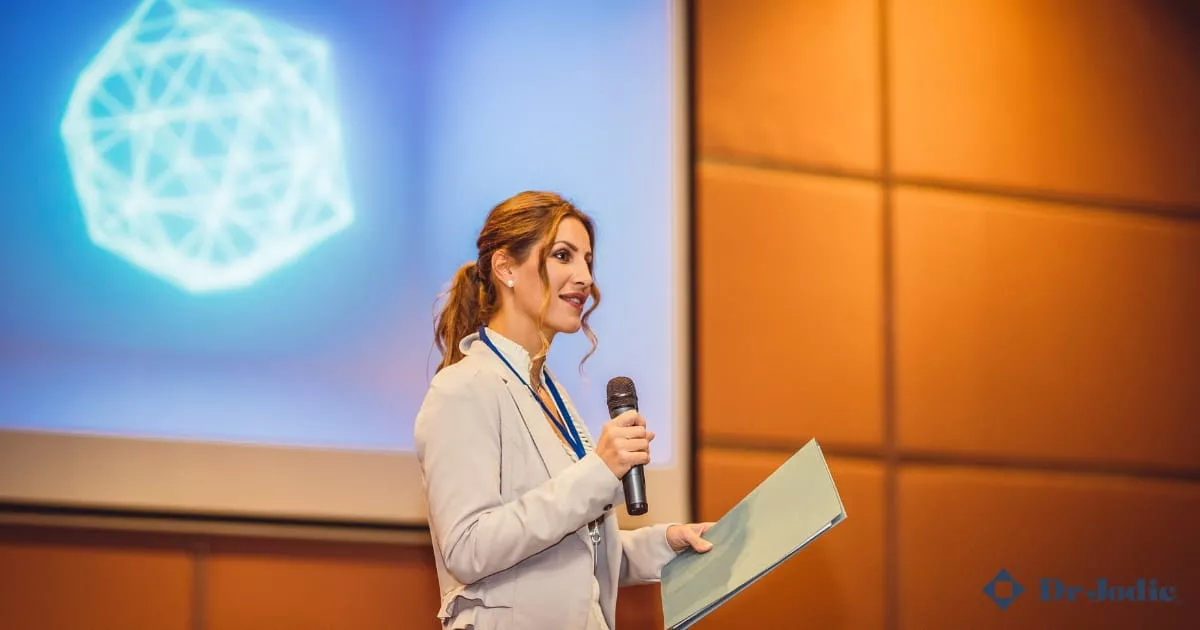
- Corporate keynotes for AI transformation programs, all-hands events, and leadership conferences
- Executive coaching for C-suite and senior leaders navigating AI-driven change
- Team workshops combining AI literacy, psychological safety, and Mind Strength Method tools
As an AHPRA-endorsed clinical psychologist, award-winning CEO, and creator of the Mind Strength Method, Dr Jodie brings dual expertise that most speakers and coaches cannot offer. To explore keynotes, workshops, or leadership sessions aligned with your AI roadmap, visit Dr Jodie’s speaking page.
Frequently Asked Questions About Workplace Anxiety and AI
How can we tell if AI anxiety is becoming a real risk in our organisation?
Watch for increased job security questions at town halls, reduced participation in AI pilots, and stress-related spikes in EAP use. Add explicit AI items to your 2026 pulse surveys and consult a psychological expert if you see persistent distress rather than curiosity.
What is the right balance between encouraging AI adoption and not overwhelming people?
Start with low-risk, high-benefit use cases and opt-in pilots rather than mandates. Leaders should demonstrate clearly that AI is here to augment human value, not replace it.
When should we bring in an external expert like Dr Jodie?
When launching major AI transformation programs, facing rising resistance, or dealing with board-level concern about culture and retention. External experts bring credibility and psychological expertise that internal teams often cannot provide during intense change periods.
Ready to Address AI Anxiety in Your Organisation?
Dr Jodie Lowinger works with HR leaders, executive teams, and conference organisers across Australia and globally to turn AI uncertainty into high performance. Her keynotes are practical, evidence-based, and built for organisations navigating real disruption.
Book Dr Jodie as your next keynote speaker and give your people the tools to move forward with clarity and confidence.